Thursday, 26 June 2014

Counter Culture: The World Cup So Far


Central and South American countries are taking the World Cup by storm. Chile, Colombia and Costa Rica have all reached the knockout phases, and did so with a game to spare, whilst Uruguay and Mexico overcame Italy and Croatia in their final games to qualify. A careful balance between caution and risk is paying off against European opposition, who have failed to cope with a new brand of counter-attacking football.


Formation: 5-2-3/4-5-1

Well designed formations, finely tuned to the strengths of the team, are the source of these convincing displays.

Where European managers might see negativity, Mexican coach Miguel Herrera, among others, sees opportunity. Deploying a five man defence, or a compact central midfield trio, encourages the opposition to push extra men forward, and guarantees that there will be space for the counter.

Done properly, these formations give the opposition a misguided sense of control. Opposition become accustomed to possession, playing in front of a rigid back line, but without any penetration. As a result, holding midfielders are more frequently joining attacks to break down such resistance.

This has a detrimental effect; with no space through the middle, these holding players find themselves forced down the channels. Crosses come into a congested box where, more often then not, play breaks down.

Once the ball is reclaimed, quick thinking goalkeepers, with excellent distribution, move quickly to exploit the positional frailties of the opposition.  Talented dribblers like Alexis Sanchez and James Rodriguez drop deep to instigate fast, direct breaks into the space left by the holding midfielders.

Brazil's Paulinho was caught out of position numerous times against Mexico, leaving Luis Gustavo exposed. Thiago Silva, a superb reader of the game, made a series of crucial interceptions to spare Brazil's blushes.

Chile also found pockets of space in between Spain's defence and midfield, targeting Xabi Alonso, who lacked the pace to track back when Spain surrendered possession. Likewise, Steven Gerrard was caught too high up the field against Uruguay, and England were duly punished.

Carrying the ball to the opposing box, or distributing it out wide to the overlapping wing backs, these nimble wingers pull the opposition defence out of position. Centre backs are tempted to step up and make a challenge, whilst the full backs are forced into retreat.

This allows on running forwards to drift into dangerous areas onside, and unchallenged. Brain Ruiz's headed goal against Italy demonstrated this, as did Suarez's against England.

It is no coincidence that the only European side to play a five man defence, Louis Van Gaal's Holland, have had remarkable success.

Tactics: play in spurts

Embodied best by Colombia, these teams play in spurts, allowing the opposition to dominate possession for large periods of a half.

When possession begins to get sloppy and stagnant, as seen with Italy and Spain, it is a sure sign that the opposition are succumbing to the oppressive conditions. This is the signal to move up a gear, sometimes only for five minutes, and is done so at blistering pace.

These spurts are calculated; they come near the end of the first half, or at the beginning of the second, when European sides struggle to maintain optimum levels of performance.

Suarez scored in the 39th minute against England, Chile notched their second against Spain in the 43rd, and Ruiz headed Costa Rica into the lead in the 44th against Italy.

Uruguay should have been out of sight against England after a ferocious start to the second half, whilst Colombia put themselves out of reach against Greece, Ivory Coast, and Japan after the break.

When preparing for their game against Croatia, Mexico will have learnt much from Costa Rica's defeat of Italy. An exhausted Italian outfit had nothing to offer come the second half, 90 minutes in Manaus having evidently caught up with them.

Although winners in Manaus against Cameroon, Croatia looked equally jaded in their next game. Mexico waited patiently, striking against tired legs in a lethal 10 minute spurt when the game became stretched.

This is how England, with so many Liverpool players in their team, would have liked to play. The simple problem is this - not once were England ahead in any of their fixtures. Rather then sit and wait for the opposition to make a mistake, England were always being made to chase the game.


Monday, 9 June 2014

Emmanuel Petit: A Man of Many Talents


“I love England, one reason being the magnificent breasts of English girls. Women are ultimately all that matters in life. Everything that we do is for them. We seek riches, power and glory, all in order to please them”. Emmanuel Petit, 1998.

A fair haired Frenchman living in London in the late 90s – Emmanuel Petit’s first spell in English football sounds loosely like the plot of a romantic novel, and at times it was.

In his 2008 autobiography, the former Arsenal midfielder recalls an incident at the hotel in which he was staying, nearby the club’s training ground. Recounting a moment he shares with a ‘pretty girl’ who frequented the games room, Petit says in the most gentlemanly fashion available, “we had a relationship one day in the snooker room”.  

A man of class on and off the pitch, Petit was clearly not shy of making himself at home in the capital, a notion confirmed by his telling comment in 1998, in which he professed a particular fondness for English women. With his immaculately kept ponytail hairdo, reaching down to the shoulders on either side, and giving him an uncanny resemblance to Orlando Bloom’s Legolas from the Lord of the Rings, Petit must have had his share of female admirers. But his most captive audience were the hordes of grown men at Highbury, who fell in love with Petit’s versatile style of play, and still hold him dear to this day.

The love affair began in July 1997, as Arsenal’s recently appointed manager Arsene Wenger sought to rebuild an aging, and by now slightly predictable midfield. Whilst the Gunners had relied on more conventional attacking midfielders, such as David Platt and Paul Merson, under Bruce Rioch, Wenger was intent on creating a more dynamic formation. The signing of Netherlands winger Marc Overmars was central to Wenger’s plans, injecting the sort of pace rivals Manchester United had been profiting from through Ryan Giggs for the previous five years.

But in order to exploit the space which this new look Arsenal side would create, behind English defences who still favoured the high line at the turn of the century, Wenger required the type of player capable of picking the ball up in front of his defence, and swiftly launching attacks from deep. Having managed Petit at Monaco, Wenger knew what he was buying into, and was able to secure the midfielder for a modest £2.5 million.

Meanwhile, on the white side of North London, another Frenchman with impressive locks was preparing to flaunt his talents both on, and one suspects, off the pitch; Tottenham signed David Ginola that same summer, and for the exact same price.  But whilst it would take Ginola time to settle and fulfil his potential, winning the PFA Player of the Year award in 1999, Petit was quick to establish himself in Wenger’s system.

Wenger had Petit sit in a deeper midfield role then he had been accustomed to previously, so to allow Patrick Viera to break forward and join Arsenal’s lethal counter-attacks, led at speed by Overmars, and an emerging Frenchman by the name of Nicolas Anelka. A long ball specialist, this suited Petit, whose vision for a ball over the top of the defence worked perfectly in tangent with the dazzling movement in front of him.

When watching some of Arsenal’s finest goals in the early Wenger years, the build-up invariably begins with Petit, be it a neat, piercing ball through the middle, or a lofted one for the on running forward. Whilst his accurate set-pieces, whipped in at pace with a distinctive action not too dissimilar from that of a rugby kicker, found the heads of Tony Adams and Steve Bould more often than not.

An excellent first season did not go unnoticed, with Petit going on to win the Player of the Month accolade in April 1998, a fitting personal achievement which was soon accompanied by a maiden Premier League medal and F.A Cup success. Not a regular goal scorer, Petit had a knack for finding the net when it counted; in 1998 he scored the only goal of the game against Derby County, a brilliant long range drive, to secure a vital three points in the race for the Premier League title.

Calmness personified, Petit was never hurried. The conductor of the orchestra, he controlled the pace of the game, keeping hold of the ball when necessary, and knowing when best to play his trademark, defence splitting passes. His quick thinking made Arsenal one of the most formidable counter-attacking sides in Europe, epitomized by a fabulous league goal against Watford in 2000, in which a diagonal ball by Petit from well inside his own half is collected by Thierry Henry, who casually flicks the ball onwards with the back of his heel before slotting home.

Petit’s attacking and defensive abilities worked well in unison. One minute he could be charging into a 50/50 with Roy Keane, the next, he was able to look up and provide an exquisite assist. Petit, and indeed Viera, set the standard for what has come to be expected of central midfielders playing for Arsenal under Wenger, and Arsenal fans have subsequently come to expect more from their midfielders over the years; they have to be ball winners and playmakers.

Brazilians Gilberto Silva and Edu replaced Petit in the early 2000s with relative success, whilst more recently Cameroonian Alex Song took up the role Petit mastered, before jumping the gun and watching his talent go to waste on the Barcelona bench, much the same as Petit in 2000.

Song’s raking balls, gratefully received by the likes of Robin Van Persie and Theo Walcott, and combative defensive presence, saw him develop into an all-rounder, who like Petit played simple but stylish football, the former of which Arsenal have increasingly forgotten to incorporate into their game. The likes of Jack Wilshire, adapt in possession, and at their best when creating from deeper positions, can also trace their midfield DNA back to the Frenchman. 

It is no surprise that Petit’s best years at international level coincided with his fine form at Arsenal. As the almost forgotten third scorer in the 1998 World Cup Final, coming after Zinedine Zidane’s two headed goals put France in control against Brazil, Petit ensured his place in French footballing folklore.

With a willing water-carrier in Didier Deschamps protecting the French defence, Petit was played in a slightly more advanced role in order to add power to the pacey Les Blues attack, and his presence paid dividends when he found himself slid through late on in the final by Viera. The enduring image of Petit galloping forward, ponytail bobbing up and down, to coolly place a shot past Claudio Taffarel’s grasp, cue euphoric celebrations from the French team, was the crowning glory of his most successful year as a player.

Settled, and at the peak of his game, Petit would have gone on to form a lasting partnership with Viera, had Spanish heavyweights Barcelona not come calling. Joining the Catalan side in the summer of 2000, Petit was deployed at centre back, where he had played for large parts at Monaco. In repositioning Petit, Barcelona chose not to utilise the excellent link up play between Petit and Overmars, also brought from Arsenal that summer, which had worked so effectively in England.

Petit struggled to make an impression; having found his best position in an Arsenal side who encouraged, and engaged the more creative side of his game, Petit perhaps found it difficult to revert to a more outright defensive role, in a league with a differing style of play. Having failed to hold down a regular spot in the Barcelona side, Petit ended his short stint in Spain, returning to England with Chelsea after just one season.

Still only 43-years-old, Petit was forced into an early retirement in 2004 after a series of knee injuries and subsequent complications.  It is unthinkable now that a player could represent Arsenal, and later Chelsea, and still be held in high regard, as the case of Ashley Cole has demonstrated. But Arsenal fans recognise Petit’s wider importance in helping to bring about a new tactical philosophy at Arsenal, and that without the dual midfield role he carried out, to both protect the defence and to create, Arsenal may have struggled to get over the line in 1998.

Rest assured, if the money ever does come hard to find, Petit can make a quick buck moonlighting as an elfin stunt double in the recent Hobbit franchise, reawakening the desire of English women in the process.


A link to a clip of Petit's finest Arsenal moments - https://www.youtube.com/watch?v=jB_6z83rKb8

Thursday, 5 June 2014

World Cup Shop Window


Want-away strikers, coveted midfielders, and those simply seeking more game time - the World Cup is a chance for players to showcase their talents to suit their own agenda, and for clubs to add to their summer transfer lists. Here is a group to group rundown of those who might be on the move.

Group A

Javier Hernandez: Little Pea was shockingly underused by David Moyes last season and appears unhappy with his substitute role. A number of Spanish clubs have been linked with the Mexican in the past, and as the vocal attacking point for his country, he will get the opportunity to remind them why he is one of the best finishers around.

Samuel Eto'o: Without a club for the first time in his career, Eto'o has reiterated his desire to continue playing at the top level. He may struggle to make an impact in what is a tough group for Cameroon, whose current squad lack creativity. Should he score well, it may convince a top European side to take a punt.

Paulinho: After a tough first season in English football there has been some talk of Paulinho moving on. A consistent performer for Brazil, and favourite of Phil Scolari's, a good tournament for Paulinho could attract European buyers, or even open up the possibility of a return to Corinthians.

Mario Mandzukic: Robert Lewandowski's arrival at Bayern Munich means Mandzukic will have to settle for being second choice should he decide to stay. Arsenal are said to be interested, and a good showing in Brazil would make a move even more likely.

Group B

Fernando Torres: Torres' career has reached a crossroads. Unable to find any long term form in a Chelsea shirt, he may feel that the time is right to return to Spain. Whatever his own feelings, they may not under consideration, with Chelsea apparently eager to rid themselves of the Spanish forward anyway. It remains to be seen whether or not he will get any serious game time, but if he can contribute goals, it will be a timely reminder that he can still deliver under pressure.

Gary Medel: Captain of Chile, it is highly unlikely that Medel will stick around at Cardiff. The club will be hoping he stands out, so to add to his value, before cashing in on him in July. Likely to head to Spain, where Valencia have been monitoring his situation.

Cesc Fabregas: If you believe what the papers are saying, Fabregas has already been offered to most major European clubs by Barcelona. Reports suggest he is almost certainty on the way out, but surprisingly there has been a lack of interest. del Bosque rates him highly and will give Fabregas the freedom to influence matches in Brazil, which should bring potential buyers to their senses.


Group C

Yaya Toure/Kolo Toure: Out of nowhere, it has started to look increasingly possible that Yaya Toure will leave Manchester City this summer. It is hard to think of any club who would not make space for him, and inspiring the Ivory Coast to the knockout stages and beyond could set up a bidding war between Europe's top clubs. Brother Kolo is surplus to requirements at Liverpool, and will need to show that he can still cut it against strong opposition if he is to secure a decent move.

Freddy Guarin: A host of English clubs are interest in the bustling Colombian midfielder, and a solid World Cup showing may convince one of them to splash out on the Inter man.

Konstantinos Mitroglou: Having played little part in Fulham's struggle against the drop, Mitroglou is not viewed as the man to roll up his sleeves in the Championship. Fulham will be desperate for him to do well with Greece and attract a European buyer, though they are unlikely to recoup the £12 million they paid for him in January.

Shinji Kagawa: Louis Van Gaal may yet fancy Kawaga, but there is just as much chance that he wont. If United do decide to sell, they will want a decent sum, and with Japan pinning their hopes on Kawaga and Keisuke Honda's intricate passing, the playmaker should impress. Will hope to convince Jurgen Klopp that he is good enough for a return to Dortmund.

Group D

James Milner: Rumours that Milner has grown tired of his subordinate role at City have spiked the interest of the Premier League's top clubs. There is no better time for Milner to rediscover the kind of form which made City so desperate for his signature in 2010.

Luke Shaw: It seems inevitable that Shaw will leave Southampton in the summer. Should Leighton Baines get injured, Shaw can prove himself against world class opposition.  Unless Manchester United move quickly before the tournament begins, they may find they have company for the full backs signature come the end of July.

Diego Godin: Atletico Madrid's squad is already in the process of being disbanded, as many critics anticipated, with Diego Costa to Chelsea nearing a done deal, and David Villa off to New York City. Godin's dominant performances have been key to the side's success this season, and helping Uruguay navigate their way through a tough group will only enhance his reputation. Both Manchester sides could do with a defender of Godin's quality, and could end up battling it out for him.


Group E

Loic Remy: A class act, Remy's form tailed off sharply at Newcastle after Christmas. Aiming to prove his credentials to a top four side in the Premier League, or even one of France's main players, Remy should get goals in a group France are expected to qualify from.

Xherdan Shaqiri: The talented Swiss winger has found it hard to usurp Bayern's dynamic duo of Arjen Robben and Frank Ribery. Too good to sit on the bench, he has plenty of suitors, and could help Switzerland exceed expectations, with his eye for spectacular goals and dangerous crossing.

Antonio Valencia: Ecuador's play revolves around the United winger, meaning he should see plenty of the ball. In one of the competition's less challenging groups, his ability to run at defenders is certain to catch the eye. In and out of United's side all season, Valencia may have to seek a fresh start if he wants to further his career.

Group F

Ezequiel Garay: South American defenders are in high demand and Garay is top of many European clubs' lists. Argentina will score plenty in their group, but there are question marks surrounding the defence. If Garay can steady a rocky back four and take Argentina far, Benfica will find it hard to keep hold of him.

Asmir Begovic: Stoke will already be expecting offers for Begovic this summer, after another fine season. The stopper could steal the headlines in a group where he will find himself tested by the world's top strikers. A great chance to increase his stock, whilst attracting the attention of clubs both in England and abroad.

Victor Moses: Moses' career at Chelsea appears over. With so much competition in front of him, and a less then impressive spell on loan at Liverpool, he is likely to be shown the exit door. Brilliant for Nigeria in the 2013 African Cup of Nations, he will be a constant threat off the wing. Expect a move to a mid-table Premier League club.

Jon Obi Mikel: A key player for Nigeria, Mikel has fallen down the pecking order at Chelsea. Jose Mourinho will only sell him if the price is right, and with the Super Eagles playing Mikel in a more advanced role, he will get the chance to impress.

Group G

Germany's entire midfield: None of Germany's dazzling midfielders are pushing for moves, but they are certainly being coveted by other clubs. The chances are that at the very least, one of Toni Kroos, Julian Draxler, or Marco Reus will leave, and strong individual performances will put their respective clubs in a powerful bartering position.

Nani: If Valencia is kept on, Nani will probably be the player moved on. A return to Portugal may suit the winger best, but he needs to show more than just trickery. A willing attitude, and a few goals to boost in Brazil, will increase interest.

William Carvalho: It looks as though Europe's top clubs are waiting to see how Carvalho fairs in Brazil, before making an offer for the Sporting Lisbon powerhouse. High praise has been coming from all quarters in Portugal, and if he can contain Germany's tricky midfield in the opening game, interest and value will soar.

Group H

Romelu Lukaku: Mourinho has been coy about his intentions for Lukaku, and this has led to interest from a number of high profile clubs. As Belgian's only recognised striker, he is expected to get goals in Brazil. Enhancing his reputation is likely to take him out of Everton's reach, and it will require a big offer if Chelsea are even going to consider letting Lukaku leave.

Thomas Vermaelen: Arsene Wenger gave a strong hint after the F.A Cup final that the defender will have to move on if he wants serious game time. Having lost his way in recent seasons, a change is needed. Must show the the kind of form which caught the eye when he joined the Gunners.

Ki-Sung-Yueng: Loaned out by Swansea last season, Ki stood out in a lacklustre Sunderland side. A clever midfielder, with a determined work rate, South Korea will hope that he can bring his excellent form to Brazil, where he could secure a good deal.


Thursday, 29 May 2014

England Must Respect Italy, But They Needn't Fear Them


Offer Italy a draw in Manaus, and they would almost certainly take it. The Azzurri, their fans, and critics alike, have traditionally maintained the opinion that it is better to draw the opening game of a World Cup, then go for the win and end up losing.


Such cautious thought has its origins in the long, defensively inclined history of Italian football, and means it is highly likely that the Italians will adopt a patient, prying approach when they meet England in Brazil. No doubt, England will come unstuck if they try to match Italy's tactics, for they are technically inferior. Instead they should be aiming to score first, and unsettle Italy from what will be a very specific game plan. To do so, England will need to target the weaknesses in Italy's compact, narrow 4-3-1-2 formation.

Italy's defence relies heavily on Juventus personal. Gianluigi Buffon is still a tough nut to crack, and will want to go out on a high, but in front of him there are frailties. Giorgio Chiellini, Andrea Bazagli, and Leonardo Bonucci are tough in the tackle and read the game well, but none of them are blessed with pace.
When faced with more talented opposition, the trio have struggled - last year Juventus went out at the group stages of the Champions League, in what was an underwhelming campaign. Domestically, the Old Lady romped to the Serie A title with a record points total to boast, but in a league falling well behind the rest of Europe in terms of quality, this was hardly spectacular.

England would do well to follow Liverpool's lead if they are to exploit Italy's lack of pace. Possession play is not England's strength, and while in the long term this needs to be addressed, it does not necessarily work against them in the short. The ball must be zipped around quickly to unsettle the Italians and draw them out of their rigid formation.

England will rely on Steven Gerrard to instigate these quick counter-attacks, and his trademark raking balls must be directed out wide, where Raheem Sterling awaits. The likes of Ignazio Abate are a far cry from solid predecessors such as Paolo Maldini, and from here the Liverpool winger should be able to glide past with ease.

Once in dangerous positions, England must not play to Italy's defensive strengths. Lofted balls into the box will be useless, as the back four are immense in the air. Keeping the ball on the floor, England can undo Italy's towering defence through a series of quickfire crosses across the face of goal. It is here where a marauding Luke Shaw, who can quickly get to the byline, would arguably create more goal scoring opportunities then Leighton Baines would, with his precise aerial balls. Diagonal through balls from deeper positions will also cause trouble to Italy's top heavy defenders, who are slow on the turn.

Paul Scholes was spot on with his recent comments regarding Wayne Rooney's role for England. The team will profit best by deploying Rooney as an out and out striker, who stays central in order to occupy Chiellini, Italy's best defender. This will create space for Daniel Sturridge, whose movement in the box will be too good for Bazagli.


A lack of mobility runs through Italy's entire midfield. Andrea Pirlo will find it tough to maintain his performance for 90 minutes, in what is likely to be sweltering conditions. Riccardo Montolivo plays in a nonchalant fashion, and should Italy find themselves chasing the game, he will probably go missing.

Be it Daniele De Rossi or Thiago Motta, perhaps even both depending on how safe coach Cesare Prandelli wants to play it, neither are the most agile, and look uncomfortable out of position. Getting the ball out wide will reduce the effectiveness of Italy's holding midfielders, who do not like to venture from their central birth, whilst tiring them out in the process.

Both managers will need to use their substitutions wisely, as this is where the game may well be won and lost. Where Roy Hodgson can call on Ross Barkley and Alex Oxlade-Chamberlain, not only fresh legs, but pacey ones too, Prandelli has only more flair players, who offer little in the way of a plan B.

Napoli's Lorenzo Insigne and Fiorentina's Alberto Aquilani have had fine domestic seasons, and would be perfect replacements should Italy find themselves cruising. But in terms of raw pace, which can make the difference in what many predict will be a tight affair, it is England who have the strength in depth.

Upfront, only Mario Balotelli has notched 10 plus goals for Italy since the 2010 World Cup. Having had an up and down season with Milan, he is not entering the tournament in prime form. Elsewhere, Giuseppe Rossi is struggling to prove his fitness, Antonio Cassano is unpredictable, and new boys Mattia Destro and Ciro Immobile are unproven at international level.

In short, Italy's forward line is not one that Gary Cahill and Phil Jagielka should be afraid of; the former's performances this season have shown that he can mix it with the very best. If there is one question mark surrounding England's centre-back pairing, it is that they are prone to pace in behind. Thankfully, Italy do not have the resources to play this style of football.

In the end it might not matter what England do. Italy are masters of their own self-destruction, and their record at major tournaments is inconsistent at best. As with France, you never know quite what to expect from the Italians - humiliation at the hands of South Korea in 2002, winners against the odds in 2006, and a laughing stock in 2010, as they failed to get out of a group containing Slovakia and New Zealand.

If England are willing to treat this tournament as a stepping stone, then they should have the confidence to try something new. They have to take the game to Italy, get an early goal, and then push for an immediate second, as Liverpool have done so well this year. Do this, and the shackles might just come off for England.

Thursday, 20 February 2014

FootballRants.com posts

Links to recent articles written for FootballRants.com -

http://www.footballrants.com/england/premier-league/great-expectations-are-norwich-city-fans-expecting-too-much-too-soon/4898

http://www.footballrants.com/england/premier-league/i-know-that-you-know-that-i-know-the-complex-mind-games-of-jose-mourinho/4961

Thursday, 23 January 2014

Much More Than Money


January transfers usually hold more significance than those settled during the summer months. As is often the case a team is either in desperate need of reinforcements, missing the last piece of the jigsaw or has a brand new owner with money begging to be used. Yet Robert Lewandowski's pre-agreement earlier in the month to leave Borussia Dortmund for Bayern Munich this summer has far wider ramifications.

Bayern are not in desperate need of the striker's services and this makes the deal much more ominous. Bayern are buying the competition around them and this cannot be healthy for the well received Bundesliga, which is in danger of becoming a one horse race. Potential transfers elsewhere this January will speak volumes about clubs and individuals if they go ahead, not least Juventus's Paul Pogba.

Pogba has been the subject of intense speculation since the beginning of January and should the Frenchman leave it will undoubtedly signal the continued decline of Italian football. Since the all Italian 2003 Champions League Final when a star studded Milan beat an equally talented Juventus on penalties, Italian football has been on a slow, downward spiral with a few notable successes papering up the cracks. Inter are still picking up the pieces post-Mourinho, Juventus's marquee summer signing was a player deemed surplus to requirements at Manchester City and Kaka sloped back to Milan last September a shadow of his former self.

One of the Italy's shining lights, Pogba is now being linked to the majority of Europe's finest clubs and this is cause for concern. What's more it's been insinuated by the media that Juventus, Serie A champions and supposed European giants will have little say on the matter if the price is right. Pogba will be a fine player in time, the sort France built their next generation of superstars around. But if the dominant force in Serie A cannot hold on to him or satisfy his aspirations then Italian football has fallen more seriously then perhaps first realised.

Any Pogba deal could also set off a chain of events leading to the dismantling of Roma's exciting young squad too. Skillful Bosnian Miralem Pjanic may be bought to replace Pogba and if not he'll be next on the rest of Europe's lists if and when Pogba comes off the market. Put simply, if Juventus can be forced into selling Pogba Roma stand little chance of keeping their best performers.


Times are even tougher at the San Siro. Sulley Muntari is apparently mulling over a move from Milan to Hull, so things must be pretty bad. Unsurprisingly Mario Balotelli is starting to get restless too. Still, the choice to install Clarence Seedorf at the Milan helm could be both Milan and Serie A's most important signing. Seedorf's winning mentality coupled with a tactical astuteness well beyond his years could get Milan back where they need to be whilst giving Juventus the challenge they need. The Old Lady's alarming exit from the Champions League at the group stages is likely a consequence of a drop in competitiveness back home.

Juventus selling what has probably become their most valuable asset in Pogba would send out a particularly defeatist message. It can lead to a situation like Arsenal's where it became acceptable for the rest of Europe to drop by the Emirates every summer and take their pick. In truth the North Londoners are only now just reversing that trend and should Wenger decide to seriously dip into his pockets once more, especially in January, it will symbolise the return of Arsenal as a serious force.

Arsenal really should have brought Gonzalo Higuain last summer but it's never that simple with the Frenchman in charge. That the Argentine is in the gossip column every weekend having only signed for Napoli in the summer further suggests the rest of Europe are increasingly viewing Italy as a bidding ground where they can get what they want, whenever they want. Arsenal's options are now limited to three or four main targets. Alvaro Morata would be a shrewd bit of business on loan or Jackson Martinez of Porto to add strength and speed to Arsenal's attacking force. Diego Costa would be the real catch if Arsenal can pull it off. A diamond in the rough he is the sort of player Wenger relishes the task of improving.


Wenger's reservations about signing players in January is backed up by past deals but Arsenal may not get a better chance than this to push for the title. At once stage it looked like they might need another defender but Laurent Koscielny and Per Mertesacker have improved hugely so all the focus should rightly be on securing a forward. Where David Moyes buying now suggests panic it will be a real show of confidence if Wenger spends big. Why? Because if Wenger didn't think Arsenal can go all the way this year he is the sort to leave off and buy another time.

Meanwhile Juan Mata's transfer to Manchester United is imminent. Whether he is worth the amount of money Man United are offering is debatable. Whether he would be a success is beyond doubt. A player that good can adapt to any system regardless of what Mourinho says. Mata will be itching to play and even more desperate to be on the plane to Brazil with Spain. United should get the playmaker now and with the returning Rooney and Van Persie crying out for some intelligent link up play Mata can inspire United to a top four finish.

It would be a momentous transfer for the club as a whole. Breaking their record signing under a manager who has been in the job barely six months would be a huge show of faith. That United are even considering to play ball with a rival side and cough up around £40 million pounds shows how desperate their situation has become. Spending that kind of money in January is a risk Alex Ferguson would never have taken, or needed to take for that matter.

Friday, 18 October 2013

The Half-Time Quiz 2 - Football General Knowledge


Here's another quiz for you football folk to get your teeth into, ranging from football celebrations to FIFA front covers.

Answers are at the bottom of the page.

1. Who were Yaya Toure's previous two clubs before he signed for Manchester City?

2. Until Paolo Di Canio's recent sacking who was the last manager in the Premier League to be dismissed?

3. What nationality is John Carew?

4. Which two players missed Manchester United's Champions League winning final due to suspension?

5. Can you name five teams Obafami Martins has played for?

6. What is Joe Hart's actual first name?

7. Can you name the four different scorers in Spain's 4 - 0 Euro 2012 triumph against Italy?

8. Graham Taylor, Terry Venables, Glenn Hoddle...what comes next?

9. Who sponsored the iconic Napoli kit Diego Maradona played in?

10. Can you name the five African internationals currently on Chelsea's books?

11. When was the last time Wales qualified for a World Cup?

12. Who was Sir Alex Ferguson's last signing as Manchester United manager?

13. Which former PFA Premier League player of the year is currently assistant manager at Ajax?

14. What colours do Real Sociedad play in?

15. What are the three nationalities of the three different scorers in last season's Champions League final?

16. Which two Newcastle players famously fought on the football pitch?

17. In which major European league has Carlo Ancelotti not managed?

18. Who made famous the 'rocking the baby' celebration?

19. What do Steven Gerrard, Francesco Totti and Xavi have in common?

20. Where did Malky Mackay end his playing career? 

21. Which players graced the cover of the FIFA 12 UK edition?

22. Who is the chairman of Aston Villa?


1. Barcelona, Monaco 
2. Roberto Mancini
3. Norwegian 
4. Paul Scholes, Roy Keane
5. Any of - Inter Milan, Levante, Seattle Sounders, Newcastle, Birmingham, Rubin Kazan, Wolfsburg 
6. Charles 
7. Torres, Mata, Alba, Silva 
8. Kevin Keegan, next England manager 
9. Mars bars
10. Victor Moses, Mikel, Samuel Eto'o, Michael Essien, Demba Ba
11. 1958
12. Wilfred Zaha
13. Dennis Bergkamp 
14. White and blue
15. Croatian/Mario Mandzukic, Netherlands/Robben, German/Gundogan
16. Lee Bowyer and Kieron Dyer
17. Germany
18. Brazilian international Bebeto
19. They have all only played for one club
20. Watford
21. Wayne Rooney, Jack Wilshire 
22. Randy Lerner

Tuesday, 10 September 2013

Parma's Nearly Moment


It's May 1997 - Carlo Ancelotti, in his first managerial season at the club where his playing career first begun, has fallen three points short of delivering Parma their first Scudetto. 

Taking on a talented Juventus outfit at the top of Serie A, Parma's nearly moment had all the right ingredients. Bankrolled by Parmalat, the ambitious though ultimately fraudulent company owned by Calisto Tanzi, Ancelotti rebuilt an already successful Parma squad to suit his vision.

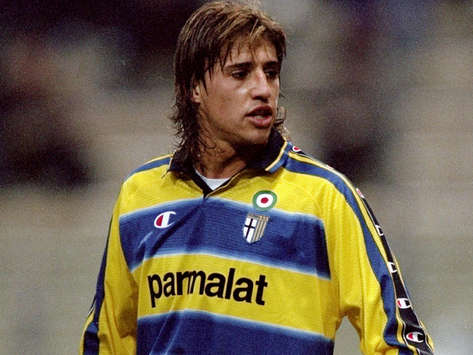
High profile names such as Fernando Couto and Hristo Stoichkov were sold to Barcelona to make way for new recruits - most notably the signing of a young Hernan Crespo from River Plate. Crespo would waste no time in showcasing his ability, chiming up a strong relationship with Enrico Chiesa in the absence of Gianfranco Zola, sold to Chelsea midway through the season. At the back Fabio Cannavaro and Lilian Thuram were showing signs that they would become two of the best central defenders in the world whilst in goal Gianluigi Buffon emerged as the latest in a string of fine Italian goalkeepers.


Parma would seldom have a better opportunity at the title; AC Milan were in disarray having seen influential manager Fabio Capello leave for Real Madrid, eventually finishing a lowly 11th, whilst Inter, who would sign Ronaldo the following summer as a gesture of their intent, were not yet capable of challenging at the very top. A 3-0 home win over Napoli on the opening day of the season set Parma's campaign in motion.


Hernan Crespo - Parma's skillful Argentine. 

What followed was a run of patchy results. Wins against the likes of Cagliari and Reggina were overshadowed by an inability to beat stronger opposition and defeats to Lazio and Inter Milan took the wind out of Parma's early season sails. But with the new signings starting to gel Parma secured back to back 1-0 wins against AC Milan and Juventus, highlighting their credentials as serious title contenders.

Chiesa would eventually finish up with 14 goals for the season, Crespo 12, but the rest of the side struggled to contribute goals; Mario Stanic was the next highest scorer on three. Juventus were hardly prolific themselves though they had a number of players spreading the goals around - Alessandro Del Piero, Michele Padavano and Christian Vieri all chipped in throughout the season with eight a piece. Juventus's strength in depth would prove to be the key factor over the course of the season.


Lilian Thuram and a fresh faced Gigi Buffon.

The sale of Zola in November hurt Parma in terms of attacking options at Ancelotti's disposal and the decision to sell Filippo Inzaghi the previous summer was a bad error of judgement. Sold to Atlanta he finished top scorer in Serie A that very season with 24 goals - goals that would have won Parma the title. Ancelotti would later come to value Inzaghi highly during his spells at Juventus and AC Milan.

But even the loan signing of Leeds flop Thomas Brolin in January could not derail Parma's surge towards the title. I Crociati overturned their early season defeats to Lazio and Inter Milan, 2-0 and 1-0 respectively, as their performances reached a peak. But a home loss to Udinese and failure to beat AC Milan meant Parma's end of season showdown with Juventus would be crucial in deciding where the title would end up.


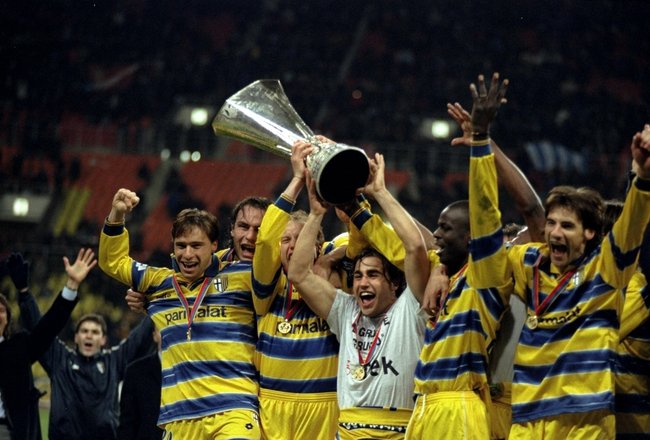
Winning the UEFA CUP.

Parma welcomed Juventus to Il Tardini on the 18th of May 1997. Zinedine Zidane, a revelation since his move from Bordeaux, scored on own goal on 29 minutes and Parma dared to dream. But Juventus responded before half-time, Nicola Amoruso scoring a particularly dubious penalty, as he would five years later against Celtic in the Champions League. Parma needed the win whilst Juventus could afford to draw in the knowledge that anything but a loss against Atlanta the following week would be enough to win them the title. Parma won their following game 1-0 at home to Bologna but Juventus kept their side of the deal as the Old Lady secured title number 24.

Though the Scudetto alluded Parma, the 90s would be their most successful spell to date with the side going on to win the UEFA Cup and Coppa Italia in 1998. After which the Italian superpowers came calling and Parma's exciting young squad was disbanded in a short space of time; Juventus signed Buffon and Thuram, Inter Cannavaro whilst Lazio spend big on Crespo and Juan Sebastian Veron. Unable to bring Parma any closer to a Scudetto and anticipating the sale of key players Ancelotti moved on to Juventus in 1999.

Friday, 6 September 2013

Why Older Grounds Still Matter


In an age in which it's seemingly every clubs ambition to built a new state of the art stadium, this previous weekends fixtures served as a welcome reminder that older, more atmospheric grounds have their advantages.


Home wins at Anfield, Selhurst Park, and Carrow Road saw Liverpool record their best start to a Premier League season since 1994, Crystal Palace get their first points on the board and Norwich hit back after an uninspiring start to the campaign. Each clubs set of supporters played a huge part in these significant victories. 

Anfield's infrastructure is perhaps a little dated compared to the teams they're looking to mix it with this season but this isn't necessarily a bad thing. Whilst Arsenal secured an impressive win against Spurs at the Emirates on Sunday you could hear the substantial difference in noise on the TV sets between the two games. Anfield is intimate, its intimating, its the kind of ground which you rarely come across these days that can completely destabilise the opposition  and strike fear into the most accomplished of teams. You could see in the final ten minutes how Liverpool fed off the crowd - with their backs to the wall they cleared every United attack and never looked like conceding. Anfield makes its players feel invincible in the famous red shirt. The Emirates meanwhile is the loneliest of places when the chips are down - think Swansea at home last season. 


Selhurst Park has to be a fortress this season and the old fashioned, albeit weary looking ground suits Palace's needs perfectly. Sunderland didn't turn up in the first half and the Palace fans preyed on this, upping the noise, getting on top of every Mackem mistake and urging Palace on in the early stages. Demanding a response from Palace and encouraging the Eagles to press hard succeeded in producing a goal which helped settle the players' nerves after a return of no points from Palace's first two games and provided the platform for an impressive win. The wooden seats and rusty turnstiles are visually unappealing but when the steeply built Homesdale Road stand is in full swing its a hostile end for opposition to attack. 

Norwich City fans have been officially voted the best supporters in the Premier League two seasons in a row and part of the reason for this is Carrow Road. A ground of the old breed, it could certainly do with a lick of paint but you can't knock the relentless noise its supporters generate. With demand for tickets consistently high Carrow Road it crammed full every weekend and the Canary supporters are rarely out sung, willing Norwich on and helping to establish some momentous victories against Arsenal and Manchester United in recent years.

Fulham are a force to be reckoned with on home turf too, whilst often failing to deliver on the road. The idyllic setting by the Thames has been a source of inspiration for the Cottagers since their return to the Premier League and the smaller capacity ground means seats are filled regularly. For foreign players arriving in London a ground like Craven Cottage is immediately appealing. It's homely, close to the supporters and has a recognisable, welcoming DNA.


Now more than ever revenue is an integral part of a clubs immediate future. As a result it's a clubs identity which is at risk of being sacrificed. West Ham are still keen on a move to the Olympic Stadium for financial incentives among others, though you can understand why the die hard Hammers fans are reluctant to leave Upton Park. A host of teams view Upton Park as their 'bogey ground', including Manchester United. To wipe away this psychological advantage and move to a home which was never truly theirs in the first place could effect West Ham more than they expect.

Newer stadiums have a more neutral feel; anyone who says the Emirates comes even close to Highbury for atmosphere and character is deluding themselves. The Emirates has never been described as 'rocking' and though the Etihad has become a difficult place for visiting teams to go every City fan still longs for the gritty nights at Maine Road, where they could really get in the travelling fans faces. There have been a few notable examples of stadiums where home advantage has clearly lost its edge in the past. The Riverside, home to Middlesbrough, was a ghost town during their relegation season and the Reebok Arena and DW Stadium were too frequently half capacity when Bolton and Wigan needed them full. Coventry City meanwhile are now feeling the full force of administration, their move to the Ricoh Arena particularly unnecessary financially, with the days of Premier League football and a sell out Highfield Road a distant memory.

In modern football there are few more depressing sights than a half empty 40,000 seater stadium. It's the Anfield's of football that maintain English football's marvellous heritage and can celebrate Bill Shankly's 100th anniversary in style; enclosed stands reverberating the supporters' raw passion, a passion which is sometimes lost in the tidy modern stadiums lacking in history and memories.


Thursday, 29 August 2013

Are England Really Prepared?


Prior to England's victory against Scotland at Wembley earlier this August a newspaper article pointed out that England would fail to make the top seeded sides for the upcoming World Cup if they failed to beat their oldest rivals and win their subsequent four qualifying matches.

This still remains a likely reality. What is of more significant concern is this - if England fail to win at least three of their four final matches they are in serious danger of failing to reach a World Cup for the first time since Graham Taylor's England in 1994.

England will most certainly see off Moldova but the results that follow are likely to see a tight finish in the scramble for qualification. Montenegro are currently in control, two points clear of England at the top of Group H having played one game more. Ukraine can leapfrog England when they meet if results beforehand go as expected whilst Poland are waiting in the wings should anyone slip up.

England will have a tough time navigating their way past a Ukraine side buoyed by home support, determined to claim some revenge for the defeat England inflicted at Euro 2012. Depending on how this result pans out Montenegro could come to Wembley willing to play for a draw. England have struggled in recent years with their possession play and could be easily frustrated by the table toppers if they are required to press and break down this resilient Montenegro side.


But England cannot afford anymore sloppy mistakes or inept attacking displays. They must be clinical in front of goal and tighten up a defence which rarely keeps a clean sheet against tougher opposition nowadays.

The recent friendly against Scotland was littered with ominous signs; signs of where it could all go wrong for England in the coming months. If Kenny Miller was allowed to turn Gary Cahill, set himself up and hammer a low drive to the right of Joe Hart without so much as a challenge you can be sure Robert Lewandowski and Marko Vucinic will do the same if given an invitation.

Man United's draw with Chelsea was hardly a spectacle but if one thing emerged it was that Rio Ferdinand and John Terry are still capable of operating at the top of their game. Phil Jagielka, the most likely candidate to pair up with Cahill, is no John Terry. But whilst alternative options are available Roy Hodgson seems intent on sticking with a partnership which will inevitably leak goals. Michael Dawson is severely underrated and a far better option then Jagielka. His absence from the recently announced squad is perplexing after two excellent clean sheets with Spurs.

Most concerning is Joe Hart's crisis of confidence, which has come at precisely the wrong time. Against Scotland the question marks surfaced once again and he did little to answer his critics against Cardiff on Sunday. Roy Hodgson would do well to sit his keeper down and play him a video of Scott Carson's disastrous mistake against Croatia which signalled the end of Steve McClaren's reign and England's Euro 2012 hopes. Then play Hart the highlights from Man City's Champions League showing against Borussia Dortmund last year to remind the Englishman of his quality and of what is expected from England's No.1.


Higher up the pitch the signs are more encouraging. Wayne Rooney was superb against Chelsea whilst Daniel Sturridge and Danny Welbeck have started the season brightly. Rickie Lambert is a valuable asset coming off the bench too. England have a habit of choosing their starting eleven based on reputation rather than form. Hodgson needs to call it right this time and Sturridge deserves his chance from the outset. England need wins, not draws and so a positive approach is necessary. Playing two dynamic forwards like Sturridge and Welbeck side by side will produce goals. Rooney can take up a similar role to the one given him by Moyes's on Monday night.

The final qualifier against Poland on the 15th of October at Wembley could yet be crucial. England have an unfavourable record against Poland and have lost their nerve a number of times against the backdrop of an edgy Wembley crowd. It's here perhaps where the fearlessness of the Ross Barkley's and Andros Townsend's could go on to make the difference and sheds some light on Hodgson's recent selection choices.

England are in a more precarious position than any fan is willing to admit and Hodgson must rally his side for one final push, otherwise he'll be joining an exclusive list which no England manager wants to be on.


Monday, 19 August 2013

Few and Far Between - Italian's in the Premier League


Italian personnel are few and far between in the Premier League. 


Following Mario Balotelli's move to Milan in January and Roberto Mancini's departure at the end of the last campaign the thin slice of Italian presence has grown even smaller. 

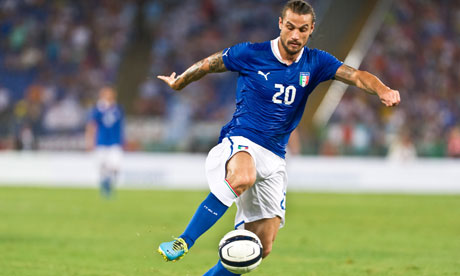
Pablo Osvaldo has become the latest Italian arrival to try and maintain this presence, having finalised his transfer to Southampton on Monday. This comes on top of Paolo Di Canio's purchase of Emanuele Giaccherini from Juventus, an exciting winger who like Osvaldo has international pedigree.

But the fond memories of Gianfranco Zola, Fabrizio Ravanelli and Gianluca Vialli lighting up the league in the late 90s have been replaced by the perceived failures of Alberto Aquilani, Alessandro Diamanti and Fabio Borini in recent times - buying from Italy is now regarded as somewhat of a gamble. 


With no real success story in the last few years, save Balotelli depending on how you view his stint with Manchester City, Italian players' long standing reluctance to test their talents in the Premier League has continued. It's unlikely Osvaldo would have moved to the South coast had he not played under Mauricio Pochettino at Espanyol whilst Di Canio's influence was certainly key in Giaccherini's decision. 

Managers seem equally reluctant to move in for Italian player. Many might have expected Mancini to bring an influx of Italian's to the Etihad on his appointment but this never materialised. Managers want players who can adapt quickly, who can endure the harsh winter months when the games come thick and fast. Clearly the opinion is that Italian players cannot be relied upon to provide this anymore. 

Yet the quality is clearly there - Italy breezed past England last summer, showing far superior technical ability. What's more Aquilani has since revitalised his career with Fiorentina, as has Diamanti at Bologna whilst Giuseppe Rossi has been a success story across Europe. 


The culture change seems to be a determining factor. More must be done to successfully integrate Italian players into English football. The word from players going both ways is that training differs in style between Italian and English clubs. Italian clubs place emphasis on a strict fitness regime, which Di Canio has incorporated at Sunderland. But questions remain whether this is adequate preparation for the more physical demands of English football. Aquilani struggled with endless knocks, Diamanti rarely looked fit and Borini has picked up numerous injuries in his short spell with Liverpool too. 

With most of the major dealings having already been conducted this summer it might be worth Arsene Wenger considering a bid for Daniele De Rossi, one Italian player who certainly is tailor made for the English game. Though having lost out to Wolfsburg for Luis Gustavo it's unlikely Arsenal could tempt De Rossi, who is fiercely loyal to Roma, to the Emirates.    

Moving to a new country in a World Cup season is extremely brave on Osvaldo and Giaccherini's parts, what with the national set up rarely looking further then Serie A to fill the seats on the plane. Sooner or later another Italian import will come good and it's perhaps a case of appreciating the fleeting spells in English football which made the likes of Zola and Di Matteo so revered rather then expecting Italians to flock to our shores like the Spanish or French. 

Monday, 12 August 2013

Everybody Goes Home Happy - Adel Taarabt Loaned To Fulham


When QPR went on record last week in saying that Adel Taraabt’s recently agreed season long loan to fellow Londoners Fulham “suited both parties” no one was inclined to argue.

With the Hoops focused on a quick return to the top flight and Fulham lacking creative depth in midfield the move benefits all involved. Not least Moroccan Taarabt, who had stated a desire to further his career in the Premier League following QPR’s relegation.  A wish which has been duly granted by Harry Redknapp having grown tired of the 24-year-old star’s frequent acts of petulance. The signing of Karl Henry to support Joey Barton in central midfield and Charlie Austin upfront suggests Redknapp is favouring a more direct, hardworking style for the arduous Championship campaign ahead.

Not so long ago Taarabt was terrorising Championship defences on the way to being named Championship Player of The Year in QPR’s 2010/11 promotion season. But that was under Neil Warnock, a manager who loves a maverick and was willing to give Taarabt the captain’s armband if it meant a guaranteed performance every week. Whilst Taarabt’s mazy runs and at times exquisite technique are not in short supply, too often have they made a habit of deserting him on a cold November visit to Barnsley. Redknapp requires a reliable squad, pulling in the same direction; Taarabt has the potential to cause disruption.

A mercurial talent, Taarabt’s unpredictability is perhaps what Fulham need after a season of mediocrity.  Damien Duff, tireless in his approach, has lost a yard of pace in recent years whilst it remains to be seen if Kieran Richardson can consistently perform at the highest level.

Dimitar Berbatov’s body language approaching the end of last season demonstrated his growing frustration at a lack of quality service and Martin Jol, who bought Taarabt to Tottenham as a youngster, has earmarked the playmaker as the man to keep the Bulgarian’s interest levels at an optimum high. Two players who demand the ball, the partnership has the potential to be counter effective. Jol may be best utilising the pair alongside another flair player like Brian Ruiz for Fulham’s home games where the side traditionally pick up the majority of their points whilst using Taarabt sparingly in away fixtures.  

Handed a Premier League lifeline, Fulham supporters will be hoping Taarabt can mature into a long term replacement for Moussa Dembele. Though if Taarabt’s erratic attitude follows him across the Thames he will be about as popular as the Michael Jackson statue outside Craven Cottage. 

Romelu Lukaku: A Bright Future


"Lukaku, woah! Lukaku, woah! He comes from Stamford Bridge, he's bigger than a fridge."


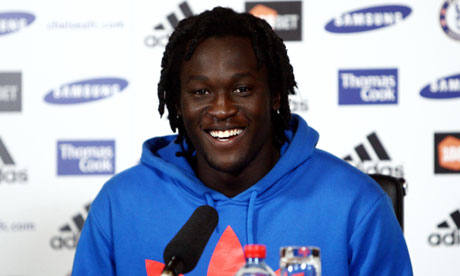
Top scorer in the Belgian Pro League at age 16, a national call-up and double against Russia soon after and 17 Premier League goals to his name last season - Romelu Lukaku has a bright future ahead of him.

West Bromich Albion fans could be heard chanting their appreciation for the Belgian forward like he was their very own throughout the course of last season, as loanee Lukaku helped guide Steve Clarke's side towards their best Premier League finish to date. The chant doesn't lie either, Lukaku is quite a presence, modelled on former Blues legend Didier Drogba and now ready to take on the mantel as Chelsea's star striker.

Signed from Belgian giants Anderlecht by the Blues for a reported £20 million in August 2011, Lukaku struggled to make an immediate impact. Chelsea, desperate to get Fernando Torres back to his best, showed little desire to accommodate for the youngster and looked to another club to take on the task of breaking Lukaku into English football. Having served as assistant manager under Jose Mourinho at Chelsea, Steve Clarke used his contacts accordingly to snap up Lukaku on a season long loan and aptly let the frustrated Belgian loose.


And Lukaku could have been forgiven for venting his frustrations - sent out on loan whilst Torres's form continued to evade him and, until Demba Ba's arrival, Chelsea suffered from limited attacking options to call upon from the bench. What's more, youngsters such as Victor Moses, Nathan Ake and Oscar were all welcomed into the fold without having to prove themselves elsewhere. This, one can imagine, is all going to change next season. In the meantime Lukaku has gone about his business in a highly professional manner.

Scoring 17 goals last season he passed his trial with flying colours, helping propel the Baggies to the upper echelons of the league. Tall, physical he surprised a few of the league's most intimidating defenders during the course of the season. And Lukaku might feel unfortunate not to have finished with a higher tally to his name. Reminiscent of Drogba he gets himself in and among the action and but for the occasional, youthful lack of composure he might have had Robin Van Persie glancing over his shoulder. A nuisance in the box, he has the predatory instinct and the technique to back it up, as displayed against United on the final game of last season when Lukaku netted an impressive hat-trick. Capable of scoring a range of goals, he's a threat from anywhere in the opposition half if you allow him the space.

Now Lukaku looks set to play a significant role in Mourinho's long term plans, whose forward play revolved around the supremely gifted Drogba during his first stint with the club. The Portuguese manager has shown he's unafraid to make bold decisions regarding his starting eleven; Iker Casillas the most high profile victim. Besides, Mourinho isn't the type to play Torres on reputation alone if he believes Lukaku would suit Chelsea's system better. Defenders dreaded marking Drogba because he provided so many different attacking threats. Lethal in the air, a powerful shot, efficient hold-up play, good on the turn and deceptively fast Lukaku ticks all the boxes of his predecessor. If there is one beneficial difference, Lukaku appears to have a sound temperament in place. 


Up until the current pre-season Lukaku had played eight games for Chelsea scoring no goals, albeit these appearances came during the difficult settling in stage after his arrival in England. Still, the Belgian will be eager to get off the mark competitively as soon as possible at the start of the new season. For all a striker's endeavour it's the goals he scores which endears him to the fans, as Torres knows only too well. 17 league goals for the Baggies is impressive but at Chelsea it's arguably the bare minimum.

Chelsea can be brutally impatient when their strikers don't deliver consistently; Daniel Sturridge the most recent example. The Blues supporters will expect and demand even more next season having witnessed Lukaku's talents from afar. Yet the comments coming out of the Chelsea camp suggest that there is a belief Lukaku can and will deliver at the highest level and that patience will be granted for a player who looks certain to live up to his price tag.

Part of Belgium's 'Golden Generation', Lukaku could well outshine some of the national side's most valuable stars this season and at just 19-years-old he's not yet unleashed his full potential - a bright future indeed. 

Thursday, 9 May 2013

10 Tasks For David Moyes


1. Win the fans over - There has been strong support from the majority of United supporters following Moyes's appointment. But each and every one of them will point towards the nagging statistic that Moyes is yet to win any silverware. Anywhere but Old Trafford and this would not be an issue. Ferguson has topped up United's trophy cabinet year in year out and its got used to being greedy. Moyes has to keep feeding the beast and whilst people claiming he'll last just one season will be proved wrong, regardless of United's performance next season, he'll need something to show by at least the half way mark in his six year contract. 

2. Who's coming, who's going - Moyes will have a difference of opinion when it comes to certain players  and he won't be afraid to act on this. Marouane Fellaini must be the most likely candidate to make the move with his manager and having seen Anderson's lethargic performance against Chelsea it would be no surprise if Moyes decided to cut United's losses on a man who, albeit unlucky with injuries, has not lived up to his potential. Nani's situation needs resolving, as of course does Wayne Rooney's. 


3. Phil Jones's best position - Phil Jones has been put in more positions this season then a Karma Sutra expert on a lazy Sunday morning. Though it's useful for United that Jones can be utilised in numerous positions, England would benefit from him nailing down a particular position next season and his most assured performances this campaign have come at centre-half. Whatever Moyes's decision, it is important for Jones's long term growth that he plays regularly in the same position next season. 

4. Backroom staff - It it ain't broke don't fix it goes the saying. Mike Phelan has been an excellent assistant under Fergie these last few seasons and if Moyes is comfortable with keeping the majority of the backroom staff unchanged then it saves a lot of time and money. Still, if he feels the need to bring his own men in then he has to do so with confidence; he's the boss and must show he has the character to make big calls. 


5. The enigma that is Wayne Rooney - How do you solve a problem like Wayne? If one man can it's Moyes. He knows what makes Rooney tick and if the Scot considers Rooney central to his plans then we can expect another hasty u-turn on the striker's part.Their relationship has been reported by sections of the media as 'strained' however and if Moyes's has guarantees that he can use the funds from a Rooney transfer he might just do so. 

6. The old guard - Paul Scholes is likely to hang his boots up for good at the end of this season but Ryan Giggs has stated his desire to play on. Whether he was made aware of Ferguson's impending retirement is anyone's guess but he might be forced to consider his United future in the wake of Moyes's appointment. Moyes would surely be grateful for a few more years of the Welshman's services but Giggs might find it difficult to embrace a fresh approach at his age. 


7. Wilfred Zaha's immediate future - Ferguson's last major signing  at United, Zaha will be wondering where he stands in the grand scheme of things after Ferguson's retirement. If Moyes rates Zaha as highly as Ferguson did then he could yet feature for the first team next season. But Moyes might see it wise to sent him out on loan to a lesser Premier League side, perhaps Everton, to give him some vital experience. 

8. Find an effective equivalent to the 'hairdryer' - Most of United's squad will have experienced the hairdryer in some form and nothing really comes close in terms of producing a reaction. Moyes has the steely eyed glare down to a tee; perfected during his time at Everton where he had to suffer the woeful performances of Andy Van Der Meyde and Diniyar Bilyaletdinov. But when United need firing up he'll need to find something a little more stirring. 


9. Ignore the press - Even if United win 3-0 on the opening day of the season the newspapers are going to find faults in their performance. Ferguson would have done this, Ferguson would have done that. Moyes is a strong character and he has to stay strong when his back is against the wall, which it inevitably will be at some stage next season. 

10. Set himself a target - One trophy next year would be suffice for anyone following in Ferguson's footsteps. Moyes has no Champions League experience and will likely learn some painful lessons playing against the elite of Europe next season. His target should be to retain the Premier League at all costs and fans will be desperate for him to oversee a smooth domestic transition, especially in the league. If he can do this the rest will follow. 

Tuesday, 30 April 2013

Brazil: Defence Is The New Attack


For perhaps the first time in Brazilian footballing history a case can be made that the national side's defensive talents are overshadowing those of their attack. Most within Brazil will take little joy from this; a nation demands and expects flourishing forward play come 2014.

But Phil Scolari's confidence in Brazil's back four, which have been questioned numerous times during previous World Cup failures, must be high, having seen some stirring displays from Dante and Thiago Silva in the Champions League this calender year.

29-years-old, Dante is at the peak of his career. A towering presence in Bayern's romp to the Bundesliga title and imminent place in the Champions League final, he has all the quality's of his Brazilian predecessor Lucio and more. There is little in terms of weaknesses; he reads the game well, is an expert tackler of the ball and has enough pace to keep the best strikers within his reach. Thiago Silva continues to discredit Joey Barton's accusations that he is an 'overweight ladyboy'. A certainty for 2014, his leadership and talent will be crucial if Brazil are to win in front of their own fans.

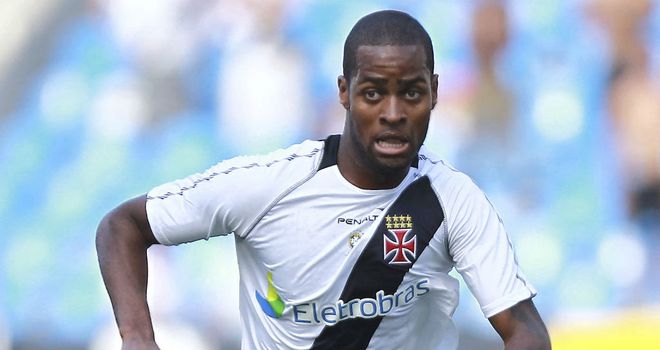
The highly rated Dede.

Lesser known to European fans is Dede. Having recently become Cruzeiro's record signing he's held in high acclaim; a cult idol for former employees Vasco De Gama, Dede was recently voted as one of the 100 greatest Brazilians of all time on a television network. Scolari could pair Dede with Silva and leave Dante in reserve if Dede's irresistible form continues.

Dani Alves and Marcelo are the likely candidates at full back and with balls like the one Alves played to Messi against PSG they'll be expected to exert an influence on games. The pressure to mirror the successes of Cafu and Roberto Carlos is ever present 

David Luiz has thrown his name into the hat too; an ideal candidate to serve as Scolari's new enforcer in front of the defence, just as Edmilson did for Scolari so efficiently in 2002. To restrict Luiz to central defence takes too much away from his game. Pairing him with Ramires as one of two holding midfielders, Luiz can roam forward as well as defend. Both need to add more discipline to their game, with the habit to neglect defensive duties a common trend in both their games. The pair can improve their chemistry at Chelsea next season.

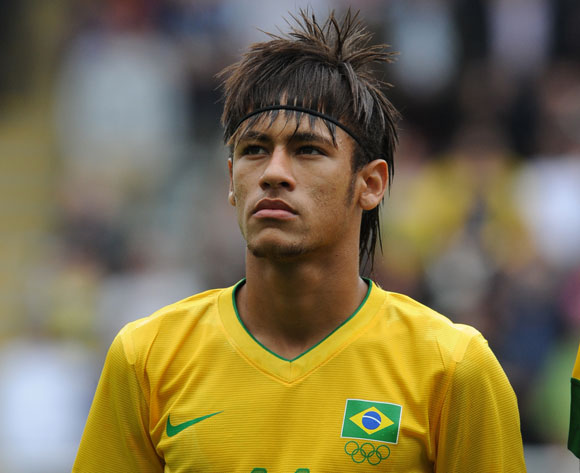
Neymar - Brazil's golden hope.

It's higher up the pitch where things aren't so rosy. Brazil are yet to work out their best form of attack, though it will most definitely by built around Santos's Neymar. Lucas looks a player and showed strength and vision well beyond his years against Barcelona. Oscar continues to develop at Chelsea and next season he will be accustomed to the Premier League's physicality. His technical ability is beyond question; lost among a disappointing defence of their Champions League trophy his goal for Chelsea against Juventus was sublime. Himself and Lucas are the likely candidates to accompany Neymar, in what could be a three man attack, with another flair player in behind.

The rest of Brazil's elite are fighting for the remaining places. Kaka and Ronaldinho would both relish one final swansong, which in itself is a sad thought considering the way their careers in Europe have stagnated. If it is to be one or the other Ronaldinho looks like the likely option, having captained the side in their latest friendly against Chile on April 24th. Scolari still has a soft spot for the man who helped take Brazil all the way in 2002.

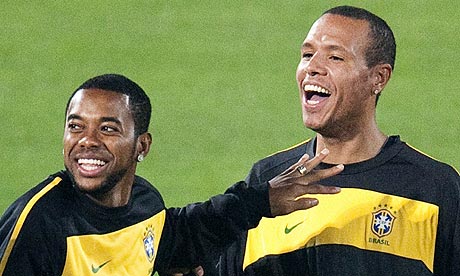
Alexander Pato has returned home to catch Scolari's eye, but he has never quite done the business for Brazil. Luis Fabiano wasted his big chance at the 2010 World Cup and at 32-years-of-age may well be considered old news by 2014, likewise Fred. Robinho, who was one of the stand out performers in South Africa, has struggled for consistency since, falling well out of favour with the national side.
.
Dunga's boys - Robinho and Luis Fabiano, currently out in the cold. 

Hulk has a taste for the spectacular  but is missing the goal threat of the legendary Ronaldo and his ambition has to be questioned; testing himself against Russian defences is not the most difficult of challenges.  Long term Tottenham target Leandro Damiao is another option Scolari will consider.

In short Brazil's attacking positions are up for grabs and whichever striker can find form next season is the one most likely to pair up with Neymar on home soil. It's a case of stick or twist; will players move abroad to impress Scolari at a major European side or stay at home where a prolific season is more likely.

It remains to be seen whether having their players scattered around the globe benefits Brazil's overall game. One thing is certain, the jigsaw is far from completion and Scolari is running out of time to find the missing pieces.